
Overview
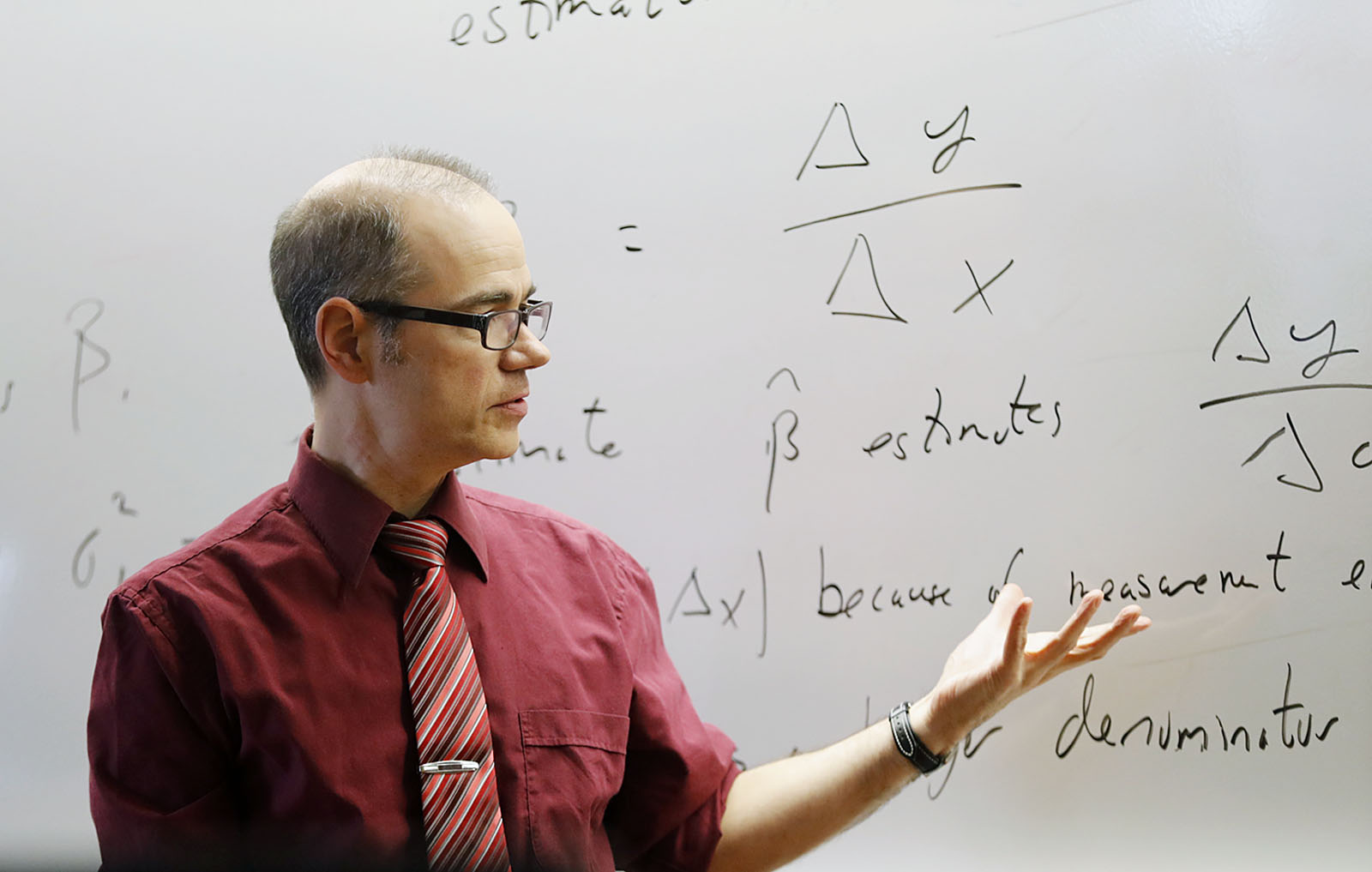
Mathematics, said to be the Queen of Sciences, has been around since humans first began using numbers. The permanence and universality of mathematics throughout the ages is a consequence of its very nature.
At a Glance
Curriculum
Why study mathematics at Mount Allison?
The Department of Mathematics and Computer Science at Mount Allison emphasizes hands-on learning.
The mathematics program introduces students to all facets of the discipline, and gives them an appreciation of the historical, theoretical and applied nature of the discipline, as well as a full understanding of the beauty of the subject.
The program offers a blend of theory and practical applications. Students are given ample opportunities to put theory into practice through labs, independent research projects, and assisting in faculty research.
Degree options
At Mount Allison, there are different degree options in Mathematics depending on your interests and career goals.
Bachelor of Arts (BA) in Mathematics
As a Bachelor of Arts student with a major in Mathematics, you'll combine your mathematics courses with complementary courses in other disciplines.
A BA honours Mathematics is also available.
Bachelor Science (BSc) in Mathematics
As a Bachelor of Science student with a major in Mathematics, you'll combine your mathematics courses with courses in computer science, chemistry, physics, and other science courses.
A BSc honours Mathematics is also available.
Mathematics +
Some complimentary majors can be combined with Mathematics to create a unique degree. These include:
- BA or BSc in Computer Science and Mathematics
- BA honours in Economics and Mathematics
- BSc honours in Mathematics and Physics
Minor in Mathematics
A minor in Mathematics consists of a selection of core and elective mathematics courses and can be combined with any degree.
Not sure about the difference between a major, a minor, an honours, and a certificate?
Program highlights
Research opportunities
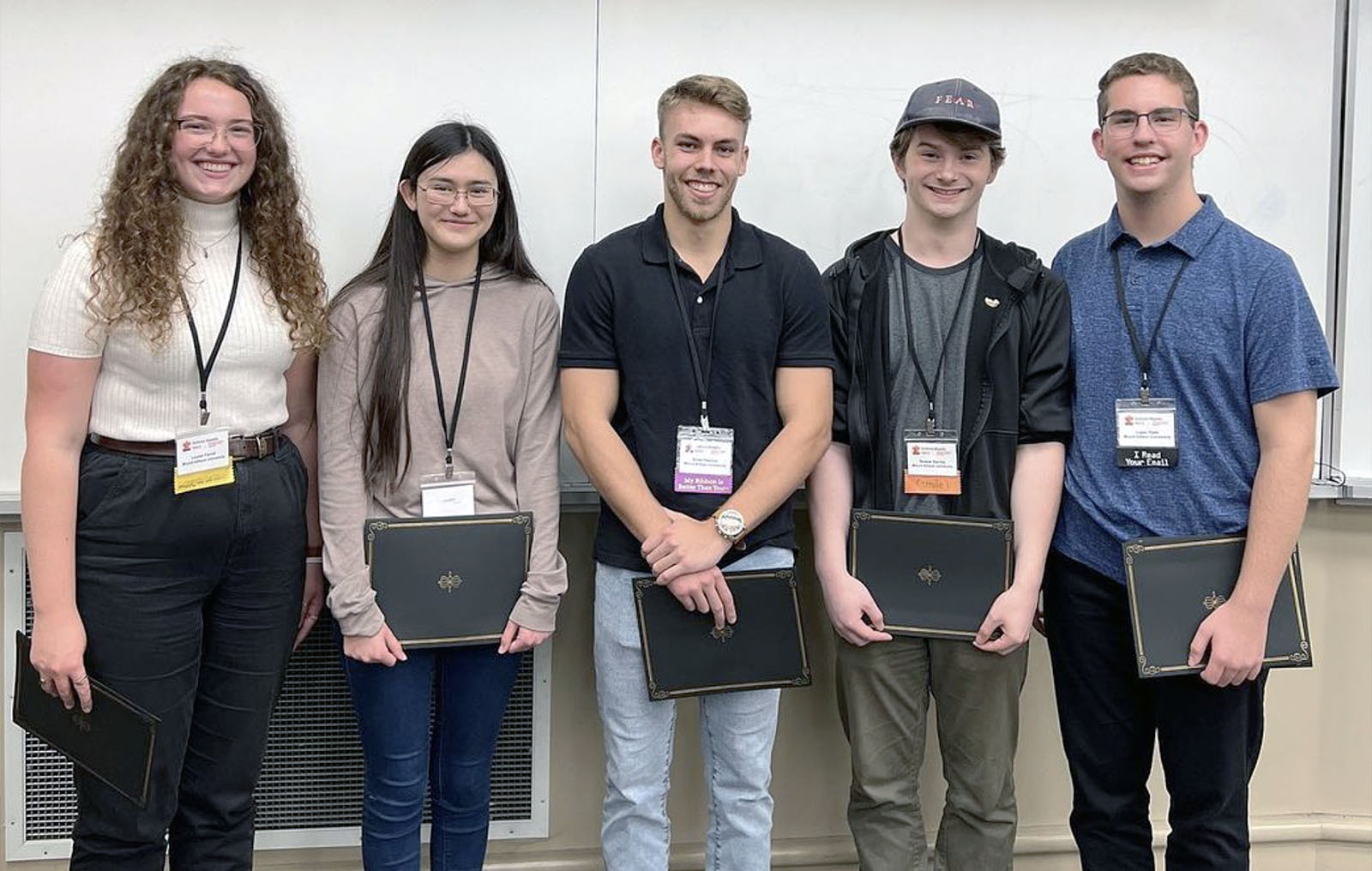
The Department of Mathematics and Computer Science offers students the opportunity to work with world-class professors on research, including employment as summer research assistants. Research topics have included: category theory, bootstrap percolation on graphs, mathematics of quantum entanglement, and ecological, evolutionary, and epidemiological phenomena.
Math Help Centre
The Math Help Centre offers a free drop-in service for students who need help in mathematics. The services are available for any student who wishes to improve their mathematical skills. The Math Help Centre is primarily directed to those in first-year mathematics courses, but students in any course who want help in math-related topics are welcome.
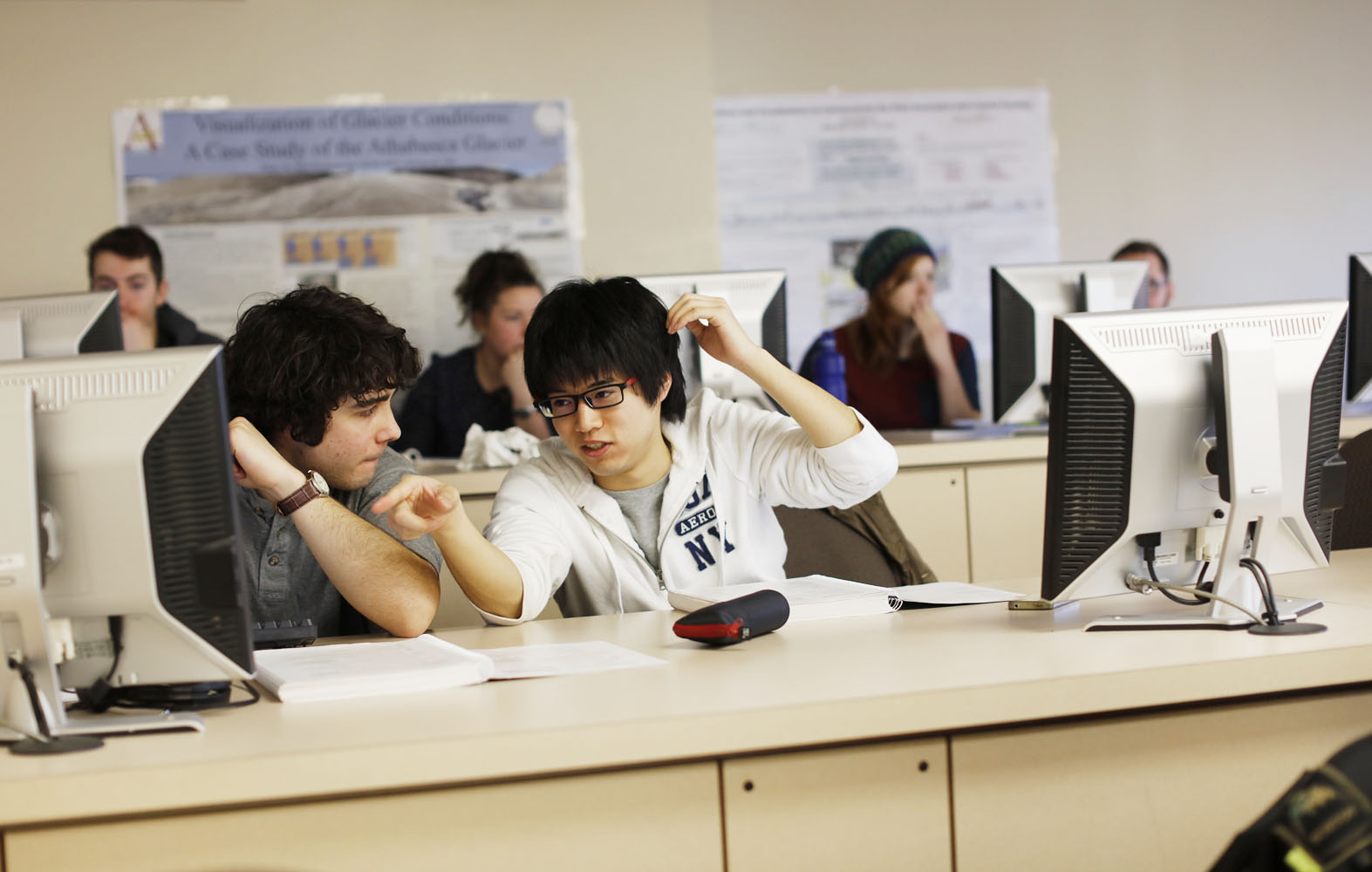
Courses are designed to address the needs of a wide variety of users, from the casual to the professional. Some students may enrol in a course to familiarize themselves with university level mathematics, while others will take a series of courses related directly to their chosen study area.
Introductory courses* may introduce students to the applications to which calculus may be applied or the practical uses of statistics.
Upper-year courses deal with topics ranging from geometry to game theory.
You will be introduced to mathematical concepts such as:
- the practical uses of statistical tools
- theoretical studies of abstract relationships
- the applications of calculus
- the use of number theory in modern cryptography
Many of the courses offered include a substantial computational component and students are encouraged to use the mathematical software tools available.
You are also encouraged to conduct independent summer research projects or to contribute to faculty research projects as a research assistant.
*A Math Assessment Test may be used for a variety of courses to determine your present mathematics ability.
MATH 1111 — Calculus I
This course introduces differential calculus. Topics include derivatives of algebraic, trigonometric, and exponential functions and applications such as curve sketching, related rates, and optimization problems.
MATH 1311 — Introduction to Data Science
This course emphasizes practical techniques for working with large-scale data and introduces tools and techniques for managing, visualizing, and making sense of data through the use of statistical software. Topics include: descriptive statistics, confidence intervals, regression, and machine learning.
MATH 2221 — Linear Algebra
This course introduces linear algebra and its applications. Topics may include: linear equations, matrices, determinants, vector spaces, linear transformations, inner products, eigenvalues, and eigenvectors. Whenever possible, the course provides geometric interpretation in two- and three-dimensional space.
MATH 2321 — Statistical Methods for Data Science
This is a second course in the concepts and techniques of probability, statistics, and data science. It further emphasizes practical computational techniques for modelling, understanding, and making predictions with large-scale data, as well as the mathematical basis of those techniques. Topics covered may include: basic combinatorics, independence and conditional probability, Bayesian methods, linear and nonlinear regression, correlation estimation and prediction, goodness-of-fit tests, and machine learning.
MATH 3161 — Complex Variables with Applications
This course covers analytic functions, Cauchy-Riemann equations, conformal mapping, complex integrals, Cauchy's integral theorem, Taylor and Laurent Series, residues, evaluation of real integrals, and inverse transforms.
MATH 3301 — Introduction to Game Theory
This course introduces the basic tools and methods of Game Theory. Game Theory is a mathematically oriented approach to understanding the strategic interaction of self-interested agents. Emphasis is on non-cooperative games. Topics include backwards induction, iterative deletion of dominated strategies, Nash equilibrium, repeated games, some equilibrium refinements, evolutionary game theory, and Bayesian Nash equilibria.
MATH 3451 — Methods of Mathematical Physics
This course provides students with a selection of mathematical skills needed in more advanced physics courses. It introduces frequently utilized mathematical methods in theoretical physics in close connection with physics applications. Topics include vector and tensor analysis, use of special functions, operators and eigenvalue problems, Fourier analysis, and complex variable techniques.
MATH 4631 — Theory of Computation
This course is an introduction to theoretical aspects of Computer Science such as formal language and automata theory and complexity theory.
Explore all Mathematics courses

Faculty Spotlight
Dr. Matthew Betti
Assistant Professor, Mathematics and Computer Science
» Mount Allison mathematics professor part of National COVID-19 Modelling Task Force
What can I do with a mathematics degree?
Through experiential learning, faculty-supervised research, and close mentorship, students develop practical skills and critical thinking abilities valued by employers and graduate programs.
Recognized by Maclean's as Canada's top undergraduate university, Mount Allison's strong academic reputation helps graduates stand out as they pursue diverse career paths.
Many go on to top graduate and professional programs in mathematics, education, medicine, and law, while others move directly into careers where mathematics is an asset, and in many fields where the ability to think and reason logically can prove beneficial.
Popular career paths for Mathematics graduates include:
- market research/data analyst
- quality assurance analyst
- inventory strategist
- actuary/accountant
- budget analyst
- business solutions specialist
- risk management analyst
- statistician/statistical analyst
- efficiency expert
- insurance broker
- appraiser
- astronaut
Alumni Spotlight
The Honourable Justice Wyman W. Webb ('78)
Bachelor of Science, Mathematics
Judge, The Federal Court of Appeal
"Mathematics is a good background for law because of the logic involved."

What is it like to study at Mount Allison?

The Math and Computer Science Department has provided a brilliant blend of theoretical and project-based learning. This balanced approach has undoubtedly prepared me for future success by fostering a deep understanding of concepts, followed by the opportunity to put them into practice.

I have really enjoyed the Math program at Mount Allison; the department is small enough that I could really get to know each of my professors and make connections, but large enough that I got to take a large breadth of classes during my time here. Another great perk is the accessibility of research for students. I have done two summers of research and they have both been very enlightening experiences that taught me a lot.
/current-students/department-mathematics-and-computer-science
What are my admission requirements?
What other programs are related to mathematics?

Computer Science
Computer Science includes the analysis of algorithms, the study of computer architectures, operating systems, networks, and software design.

Physics