

Overview
The study of politics examines the nature and workings of power, state, and government; the rights and duties of citizenship; the limits and possibilities of collective political action; and the social, economic, and cultural formations that shape the life of the political community.
The scope of inquiry is local, national, and international; it includes the empirical analysis of individuals, groups, institutions, and processes as well as the investigation of long-standing philosophical questions concerning human nature, freedom, democracy, and justice.
At a Glance
Curriculum
Why study political science at Mount Allison?
Mount Allison’s Department of Politics and International Relations combines traditional and innovative approaches to equip students with the knowledge and critical thinking skills they need for active and creative engagement with the world around them.
The Department’s faculty are accomplished scholars and teachers whose expertise reaches across the fields of Canadian politics, comparative politics, global studies, international politics, and political theory.
Intensive learning and research opportunities abound for students interested in building upon the foundation of their coursework through independent study projects or through study abroad programs and other international experiences.
Political Science is available as:
- BA major (60 credits)
- BA honours (72 credits)
- Minor in any degree (24 credits)
Not sure about the difference between a major, a minor, an honours, and a certificate?
At Mount Allison, the Political Science program is organized into four main subfields. These include:
- Canadian politics
- Comparative politics
- International politics
- Political theory
The program offers students the opportunity to gain a strong foundation in all four subfields and to combine empirical, practical, and theoretical approaches in each year of study.
In addition to courses in Canadian politics, you may choose specialized area courses in Africa, Europe, the Middle East, and the United States.
If you wish to pursue a more intensive concentration in one particular subfield, you can also take courses in Canadian studies, international relations, history, and philosophy.
POLS 1001 — Foundations of Politics
This course is an introduction to the foundations of politics through the medium of political theory, Canadian politics, comparative politics, or international politics.
POLS 2211 — Canada and the World
This course is a critical analysis of Canada's place in a rapidly evolving global order. It places particular emphasis on media technology.
POLS 2221 — Introduction to Comparative Politics
This course introduces the comparative methods and the importance of theory in this sub-field. It examines several country case studies selected from diverse geographical regions throughout the world. Its topics may include contemporary issues such as terrorism, social movements, civil conflict, and democratic transitions.
POLS 3031 — Women and Politics
This course examines the relationship between women and politics. Its topics may include the historical and conceptual roots of the problem of citizenship for women, patterns of women's participation in politics and government, the politics of the women's movement, and women's effects on public policy.
POLS 3221 — African Politics
This course introduces the study of African politics and development. It examines a number of country case studies and important contemporary issues. Its topics may include critical analysis of colonial and pre-colonial historical contexts, the nature of the post-colonial state in Africa, and the manner in which Africa is integrated into the global economy.
POLS 4161 — Disability Politics and Policy in Canada
This course examines the evolution of disability politics and policy in Canada. It emphasizes conceptualizations of disability, political participation, advocacy, and rights-based approaches to changes in public policy.
Explore all Politics and International Relations courses
What can I do with a political science degree?
Through experiential learning opportunities, faculty-supervised research, and close mentorship, students develop practical skills and critical thinking abilities valued by employers and graduate programs.
Recognized by Maclean's as Canada's top undergraduate university, Mount Allison's strong academic reputation helps graduates stand out as they pursue diverse career paths.
Many go on to top graduate and professional programs in law and political science while others move directly into careers in public policy, government, and beyond.
Popular career paths for Political Science graduates include:
- legislative/executive assistant (for MPs, provincial representatives)
- public policy/business analyst
- intelligence/threat management analyst
- emergency preparedness officer
- cultural affairs/foreign service officer
- municipal administrator
- urban planner
- immigration/citizenship officer
- community development officer
- human rights officer
- government relations officer
Alumni Spotlight
David Spence ('19)
Bachelor of Arts, Political Science and Religious Studies
Anti-Corruption Specialist, United Nations Office on Drugs and Crime
» David Spence (’19) shares his journey from high school dropout to working for the UN

What is it like to study at Mount Allison?
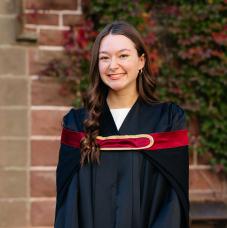
Studying political science at Mount Allison has been extremely rewarding. The program has provided me with invaluable research experience and prepared me for a future in the public sector by teaching practical skills and assigning projects structured around real-world deliverables.
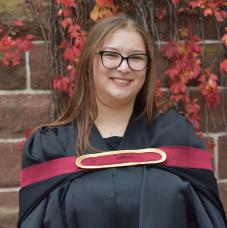
The Political Science department is full of extremely passionate professors who are happy to help you every step of the way. I loved my time there and the community that surrounded the program.
/current-students/department-politics-and-international-relations
What are my admission requirements?
What other programs are related to political science?

International Relations
IR examines the globalizing effects of economic, social, technological, environmental, military, and political processes, as well as issues of justice, responsibility, and human well-being.

Philosophy, Politics, and Economics (PPE)
PPE brings together three disciplines, giving students insight into the meaning of citizenship, how government works, the nature of justice, and the outcomes of economic systems and policies.

Canadian Public Policy
Canadian Public Policy is an interdisciplinary program examining public decision-making and policy processes related to environmental, social, health, and economic policy.